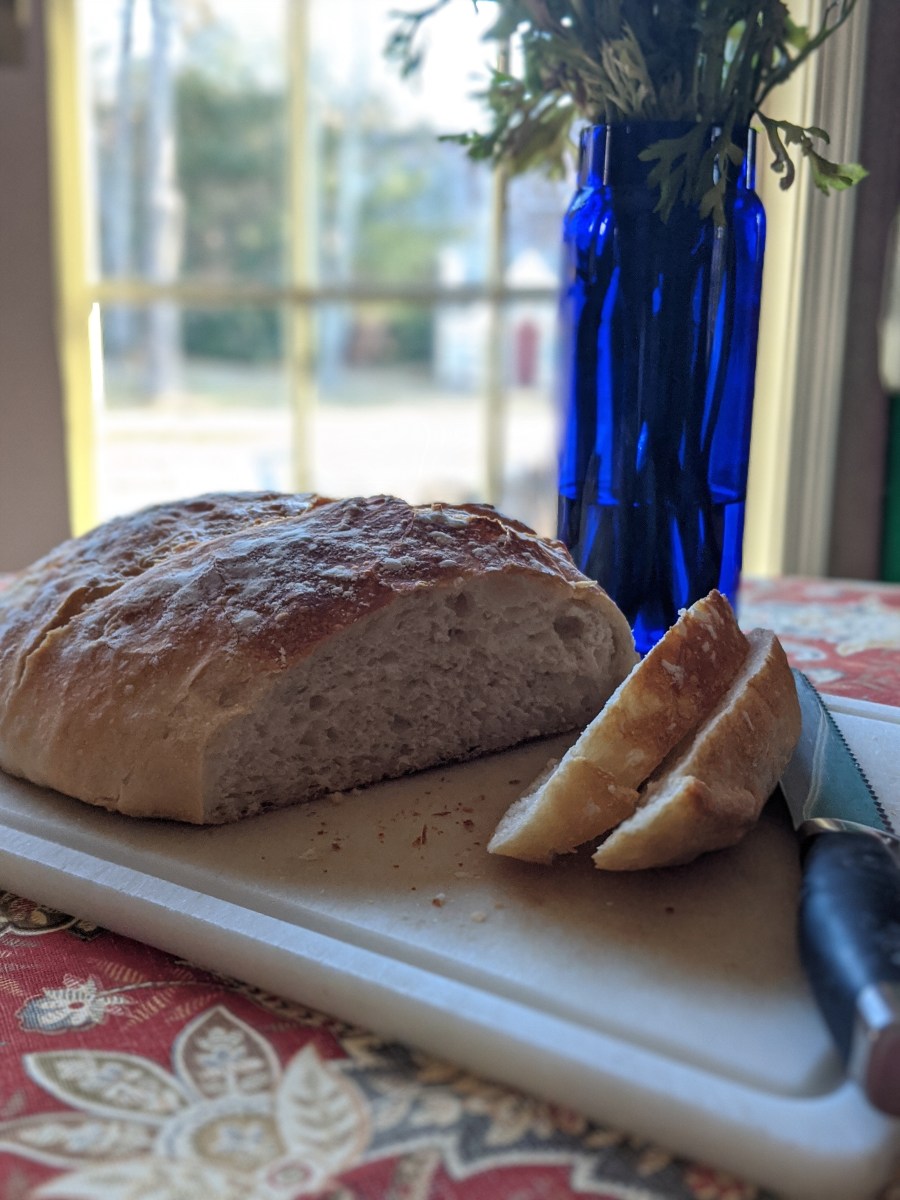
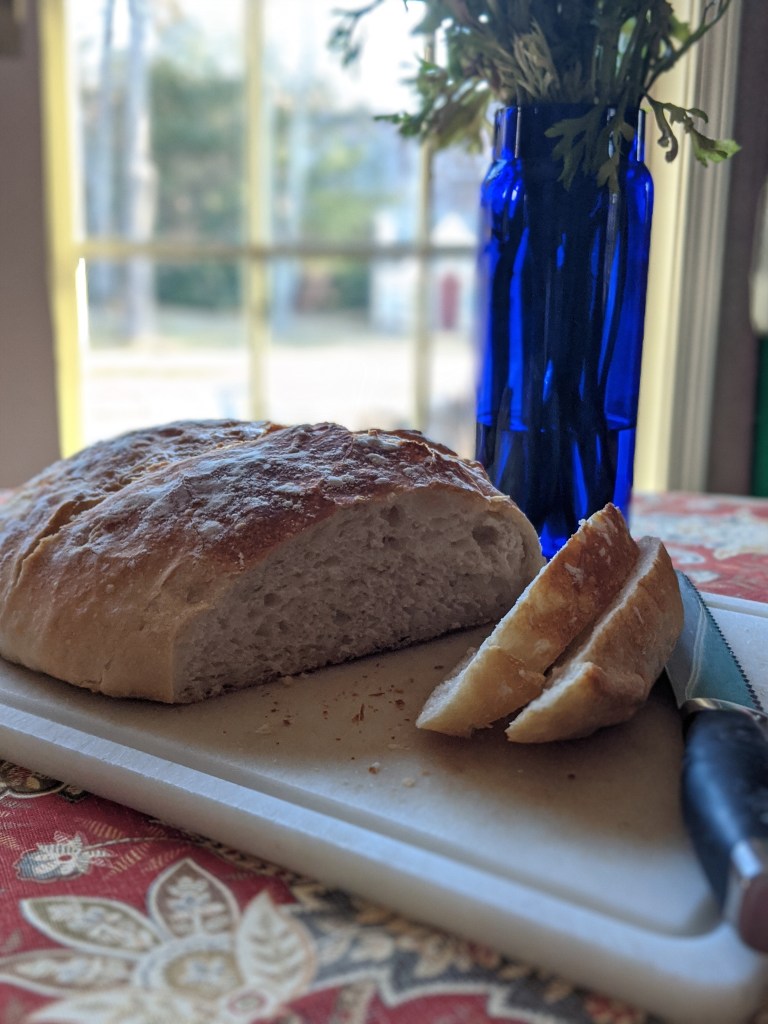
This is not a recipe. This is a story. And some helpful links to help you start making sourdough, if that’s a commitment you wish to undertake.
Two weeks ago I was bored. It was Presidents Day. I didn’t have any work to do. It was sunny out. The neighborhood cat came to visit. I had a bandana in my hair. It seemed like the perfect time to begin a sourdough starter. I had watched and read many videos and articles on sourdough, and it always seemed too complex and scary. If you looked at it wrong it would die. Also it takes forever. I like one day bakes. It’s much more satisfying to have a finished cake by the end of the day than a sticky ball of flour and water that may, in about 2 weeks, if you’re lucky, become bread. But I decided I was going to stick to it, and more than that, I would prove that it isn’t that hard, really.
Throughout my sourdough journey, which is what I’ve decided to dramatically refer to it as, I actually learned a lot about fermentation, but even more importantly, I discovered many mini-recipes. Let me explain. When you make a sourdough starter, you have to discard about half the starter every day before feeding the remaining starter. This is because if you didn’t, the starter would get far too large. I think there is another reason too that has to do with the yeast, but don’t quote me on that. However, I hated the idea of just tossing out sourdough starter everyday. It felt so wasteful. So instead I looked up some recipes for discarded sourdough starter, scanned them, internalized them, mostly ignored their instructions, and made up some of my own.
The one I made the most had to be sourdough crackers. I was initially inspired by a recipe from King Arthur Flour, but then I just started making them my way. I would throw in enough flour with the starter to make it dry enough to come together with a bit of olive oil. Then I would add in whatever mix-ins I wanted. These included poultry seasoning, garlic powder, rosemary, thyme, gouda, and parmesan. And salt. A LOT of salt. I would then roll the dough out, cut it with a pie cutter into cracker sized squares, and bake them at 350 for about 30 mins, or until cracker consistency.
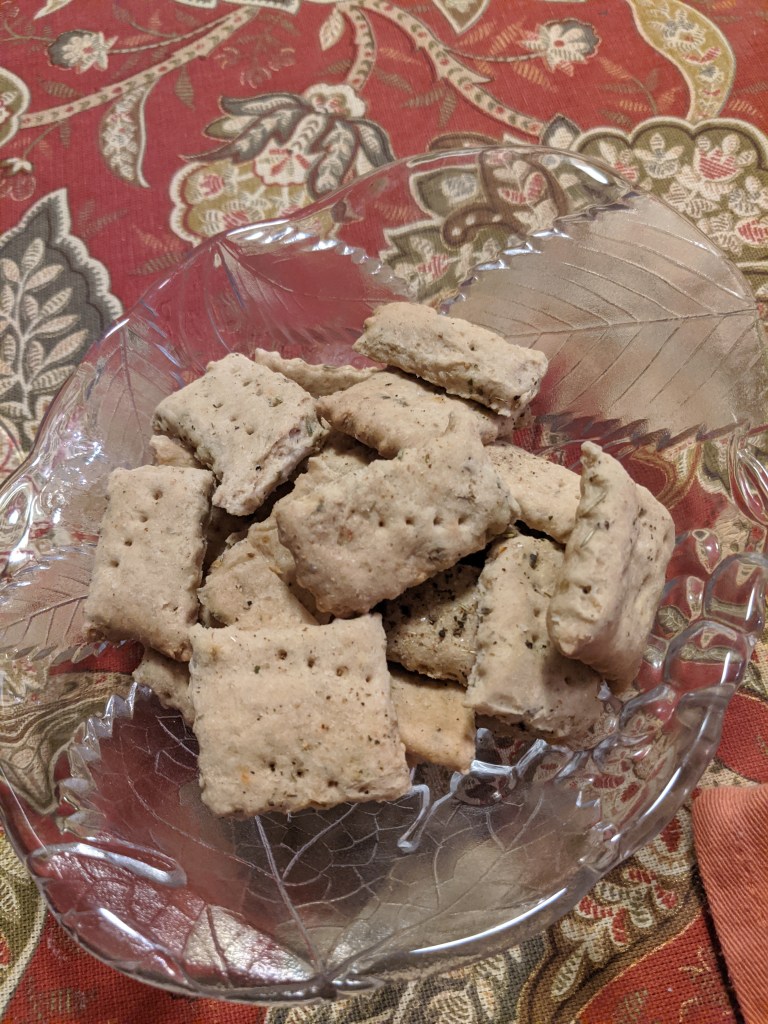
I made far more of these, but I ate a whole bunch before I took the photo
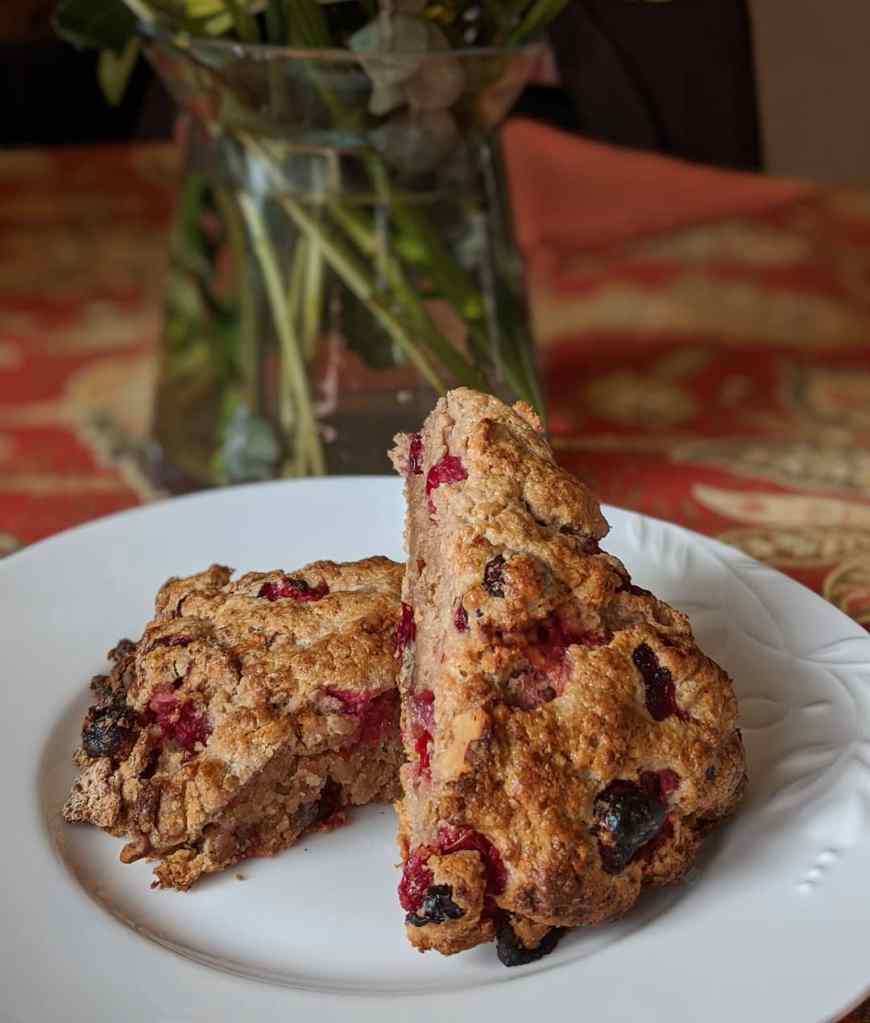
However, when you’re discarding a significant amount of sourdough starter every day, you start to get overwhelmed by crackers. You need other options. My dad loves scones, so I decided to make him cranberry walnut sourdough scones. I used this recipe which I changed by using 1/2 cup all-purpose flour, rye flour, and white whole wheat flour, omitting the sugar crust on top, and replacing the cherries with fresh cranberries.
But my absolute favorite sourdough starter byproduct has to be pikelets. This is not because they are especially life changing or extraordinary tasting, but they are delicious and so easy. They are essentially English crumpets, but without the fussy ring mold, and where do all almost-English things come from? Well Australia of course. I followed this recipe. It’s perfect because all you use is the sourdough starter left over (don’t bother measuring out an exact cup) and add a teaspoon of sugar, half a teaspoon of baking soda, and some salt, and in just a couple minutes you have delicious pancake-looking crumpets to have right away for freeze. There is no extra flour needed. It’s extremely satisfying.
Now, to the topic of sourdough. Everyone makes it differently, and I am convinced that people make it unnecessarily complex, so I put that theory to the test. I suppose this next section can be called a “recipe,” but I’m making no guarantees. At this point I have made exactly one (1) loaf of bread, so I’m not exactly an expert.
To make my starter, I combined 4 ounces of rye flour with 4 ounces of water and left it somewhere warmish for 2 days.
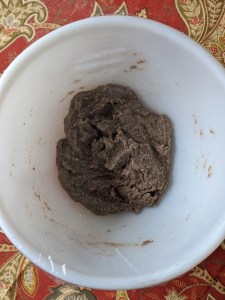
Day 1 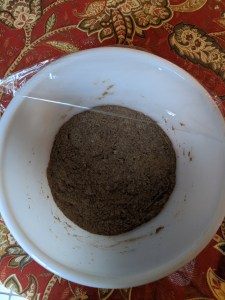
Day 4/5
For every following day, at around the same time, I would remove 4 ounces of starter from the bowl it was in to another bowl and add 4 oz of water and 4 oz of all purpose flour. If you’re a little over, that’s okay. Just make sure you have the same or a little more flour and water than you do starter. Then in the bowl with the leftover starter, you can make whatever discard sourdough starter recipe your heart desires. (And you have time for).
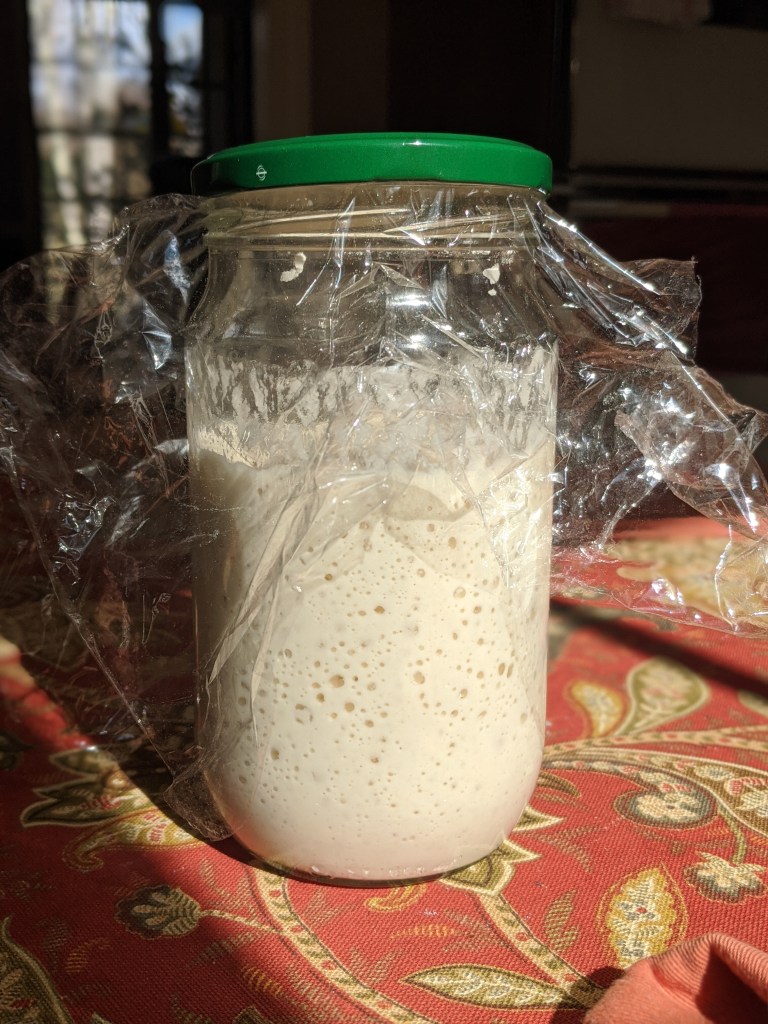
Day 12
About 12 days later, when your sourdough starter doubles within 12 hours and floats when a small amount of it is dropped into some water, it’s read make some bread. I followed the America’s Test Kitchen recipe for this, since it was the least complex one I had seen.
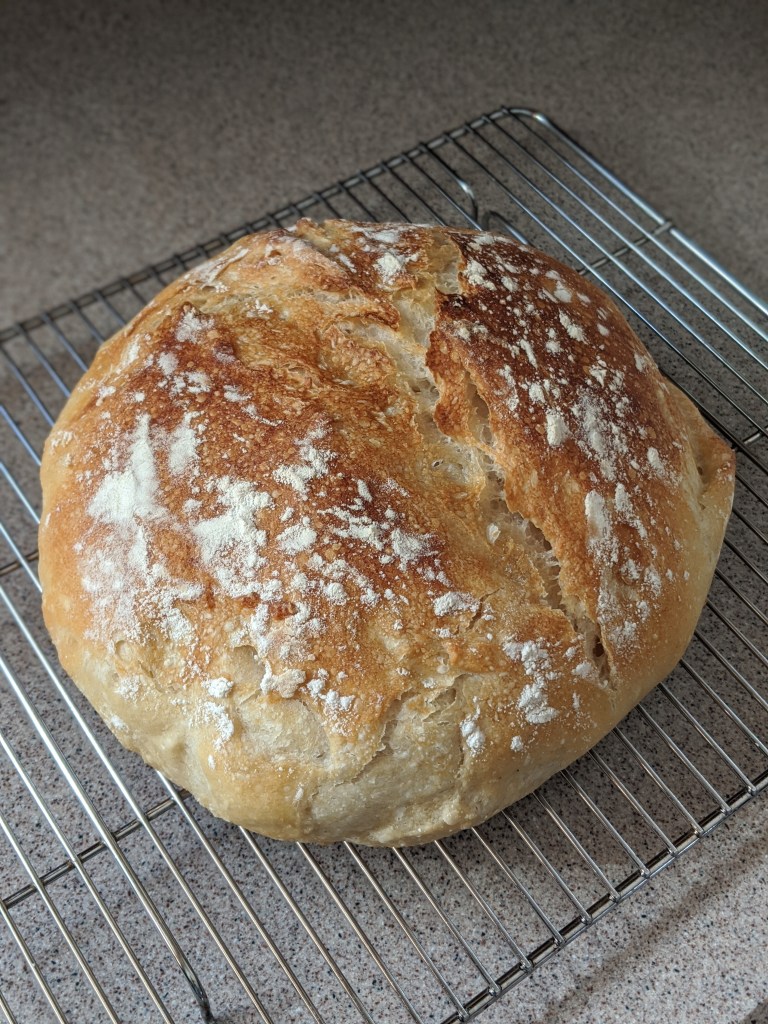
I was pretty thrilled by the results on my first go. I think I will probably get my oven a little hotter and maybe bake it a little longer for a thicker crust. Every oven and every dutch oven is a little bit different, so it will probably take a lot of tweaking and experimenting before I get the perfect loaf, but in the end, all bread is good bread, especially if there is butter on it. Never forget that.
 Never Enough Counter Space